
Tire Recycling Center Near Me: Drop-Off Fees & Hours
Use this guide before loading old tires into your vehicle. It explains where to take tires near you, how fees usually work, why rims and tire size matter, how to check same-day hours, and what to do when a normal recycling center rejects tires.
Quick Answer: Where to Take Old Tires Near You
The best tire recycling option is usually one of four places: the tire shop where you buy replacement tires, a city or county transfer station, a landfill or solid-waste drop-off site that accepts tires, or a local tire amnesty / scrap tire collection event.
A normal recycling center may reject tires unless its official page specifically says tires are accepted. Tires are bulky, can hold water, can create mosquito and fire risk, and may require a permitted hauler or processor depending on quantity and state law.
Official Source Screenshot: Why Tire Fees and Drop-Off Rules Vary
The screenshot belongs here because tire recycling is not a one-price, one-rule service. A nearby map result may be a tire shop, transfer station, landfill, county event, private processor, or public works yard. Each may have different fees, rim rules, appointment rules, and quantity limits.
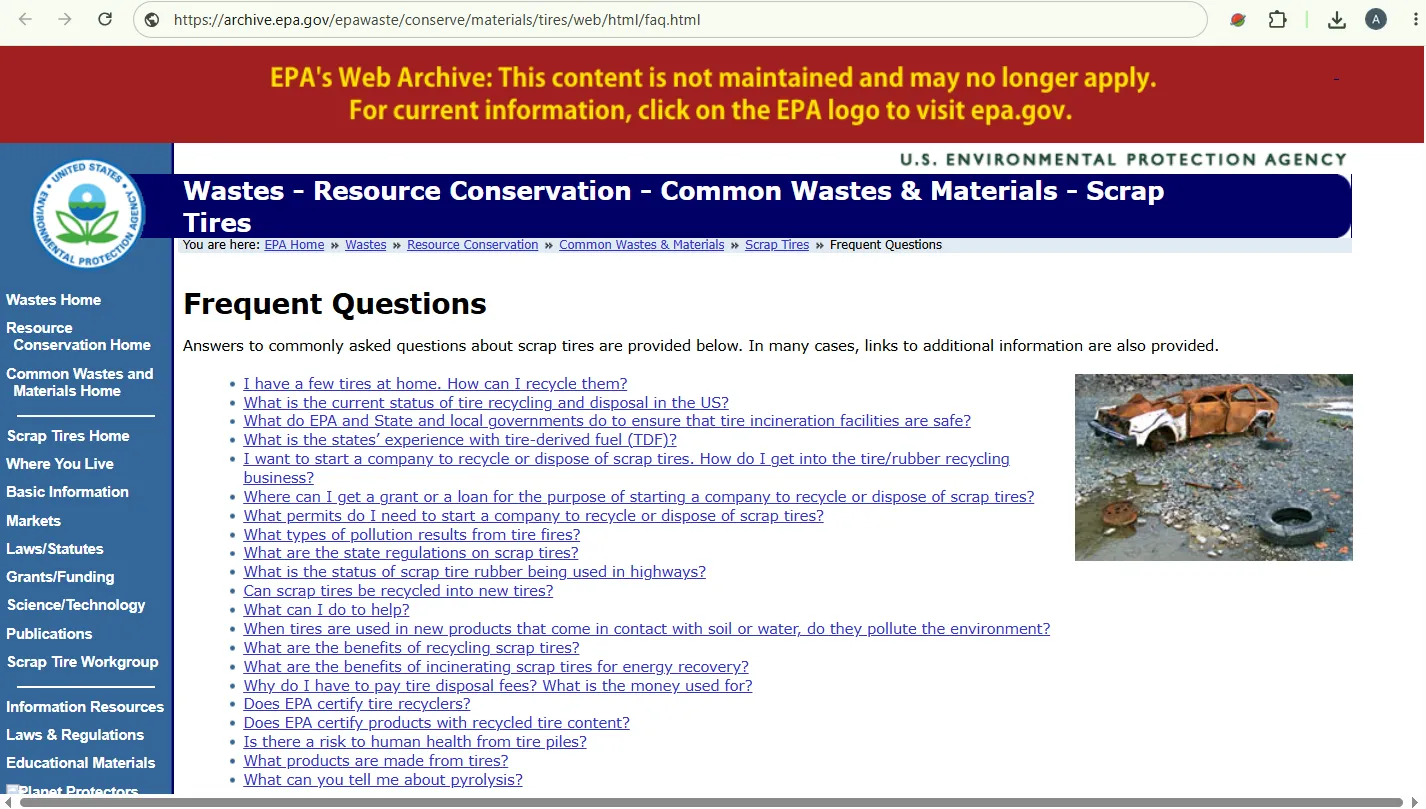
Use national guidance to understand the tire category, then use your official state, county, city, landfill, transfer station, retailer, or tire program page for the final answer.
On This Page
- Fast tire drop-off answer
- Official source screenshot
- Tire recycling finder
- Fees and estimate helper
- Official state and PDF examples
- Hours, weekends and holidays
- Where to drop tires
- Accepted tire types
- Tires with rims
- Quantity and hauler rules
- Rejected tires
- Dumping and stockpile risk
- Before-you-go checklist
- Map and directions
- FAQ
Tire Recycling Center Finder: Search the Right Type of Place
Enter your city, ZIP code, county, or state. The tool builds searches for tire recycling, tire disposal fees, and tire amnesty events. After opening a result, verify the official local page before loading tires.
Tire Recycling Drop-Off Fees: What Affects the Price?
Tire recycling fees are local. A tire shop may include disposal when you buy new tires. A transfer station may charge per tire. A landfill may charge by tire size, by weight, or by rim status. A county event may accept a limited number for free. A commercial load may need a licensed hauler instead of public drop-off.
Simple Tire Fee Estimate Helper
This is only a planning helper. Use your facility’s official fee table for the real price.
Official Source and PDF Takeaways: Fees, Haulers, Landfills and State Rules
These examples are not universal prices. They show why tire recycling needs local verification.
| Official Source | What It Adds to This Guide | Practical User Takeaway |
|---|---|---|
| EPA scrap tire laws and fees | EPA explains that many states use scrap tire fees to fund tire management and cleanup programs. | Do not expect one national tire recycling fee. Check your state and facility fee table. |
| New York DEC waste tire page | Shows a state example where a $2.50 waste tire management and recycling fee is tied to new tire sales. | State fee rules may be built into the new tire purchase process. |
| Connecticut DEEP scrap tire page | Shows a different state example where extra tire surcharges are retailer-discretionary, not state-mandated. | The same tire question can have a different answer in another state. |
| CalRecycle hauler guidance | California says transporting 10 or more used/waste tires requires waste tire hauler registration. | Large loads may create hauler/permit issues, not just a higher fee. |
| Florida DEP PDF | Florida guidance says waste tires may be disposed only at a permitted solid waste management facility for waste tires. | Use permitted disposal routes, not roadside dumping or random drop-off. |
| Texas TCEQ public disposal page | TCEQ says scrap tires may be disposed in an active permitted landfill if split, quartered, or shredded. | Landfills may reject whole tires or require special preparation. |
| Michigan EGLE grant PDF | EGLE notes that tires holding water can breed mosquitoes and tire fires are hard to control. | Do not store or dump tires; use official cleanup events or permitted programs. |
Tire Recycling Hours Today: Open Now, Weekend and Holiday Checks
Tire drop-off hours may be different from normal recycling hours. A transfer station can be open while the tire area is closed. A landfill scale can close before the public gate. A retailer may take old tires only during service hours. A county event may accept tires only during a short posted window.
| Search Intent | What Can Go Wrong | What to Verify |
|---|---|---|
| Tire recycling open today | The facility may be open for other waste but not accepting tires today. | Ask specifically whether tires are accepted today. |
| Tire recycling open Saturday | Saturday may have shorter hours, bigger lines, or earlier scale closure. | Confirm tire lane hours and last-entry time. |
| Tire recycling open Sunday | Many public transfer stations and landfills are closed Sunday. | Check Sunday tire acceptance, not just business listing hours. |
| Holiday tire drop-off | Government facilities often close on city, county, state or federal holidays. | Check the official solid-waste holiday schedule. |
| Appointment-only events | Tire amnesty events may require registration, proof of residency, and time slots. | Bring appointment confirmation and ID if required. |
Where Can You Drop Off Old Tires?
The best place depends on whether you are replacing tires, clearing old tires from a garage, cleaning up dumped tires, or managing a business load.
Accepted Tire Types: Passenger, Truck, Tractor and Specialty Tires
The word “tire” is not specific enough. Facilities often separate tires by size, rim status, source and condition.
| Tire Type | Usually Easier or Harder? | Call-First Question |
|---|---|---|
| Passenger car tires | Usually easiest for resident programs, tire shops, transfer stations and events. | What is today’s fee for a standard passenger tire? |
| Light truck / SUV tires | Often accepted, but fees may differ from passenger tires. | Do you price light truck tires differently? |
| Semi-truck tires | Often restricted, commercial-priced or excluded from resident events. | Do you accept semi tires from households? |
| Tractor / agricultural tires | Often special handling only and may be expensive or event-specific. | Do you accept agricultural tires, and what is the size limit? |
| ATV, motorcycle or bicycle tires | May be accepted by some shops or specialty programs. | Do you accept small specialty tires? |
| Foam-filled, solid, cut or shredded tires | Often rejected at public collection events. | Do you accept foam-filled, solid, cut or shredded tires? |
Tires With Rims: Why the Fee or Rule May Change
A tire mounted on a rim is not the same as a loose tire. Some facilities accept both. Some charge more for rims. Some require the rim to be removed first. Some send rims to a metal recycler and tires to a separate tire processor.
How Many Tires Can You Bring? Household Limits, Bulk Loads and Hauler Rules
Public tire programs often limit how many tires a household can bring in one visit, one day, one year or one event. Limits help stop businesses from using resident-funded programs and help keep traffic, storage and fire risk under control.
| Quantity | Likely Rule Risk | Best Action |
|---|---|---|
| 1 to 4 tires | Usually manageable for retailers, transfer stations or small household programs. | Ask fee, rim rule and same-day hours. |
| 5 to 9 tires | May trigger household quantity limits or event-specific rules. | Ask whether the site has a daily or annual household limit. |
| 10 or more tires | May trigger hauler registration or bulk-load rules in some states. | Call the county/state program before loading. |
| Business tires | Often not eligible for resident events. | Use a commercial scrap tire recycler, permitted hauler or business account. |
Rejected Tires: What May Not Be Accepted
A tire recycling center can reject tires for safety, cost, equipment, permit or program reasons. Rejection is common when the tire type does not match the program.
| Problem Tire | Why It May Be Rejected | What to Do Instead |
|---|---|---|
| Water-filled tires | They can breed mosquitoes, add weight and create handling problems. | Ask the facility how to drain or prepare them safely. |
| Dirty, muddy or cement-covered tires | Excess debris can contaminate handling and increase disposal cost. | Clean them if the official program requires it. |
| Commercial or shop tires | Resident programs may not accept business-generated waste. | Use a commercial scrap tire hauler or business recycling contract. |
| Oversized, tractor or heavy equipment tires | They may need special equipment, storage and pricing. | Call a processor, landfill or county solid waste office first. |
| Cut, shredded, solid or foam-filled tires | They may not fit the public collection program’s processing contract. | Ask for a specialty processor or commercial disposal route. |
| After-hours drop-offs | Leaving tires outside a gate can be treated as illegal dumping. | Return during posted hours or use an appointment/event slot. |
Why Scrap Tire Rules Are Strict: Mosquito, Fire and Illegal Dumping Risk
Scrap tires are not handled like ordinary curbside recycling because piles of tires can create serious problems. Tires can hold water, create mosquito breeding areas, become illegal dump sites and create fire hazards that are difficult to control.
State and local programs often regulate who can haul, store, process and collect scrap tires. Businesses, large loads and cleanup projects may need licensed haulers, manifests, permits, event approval or official cleanup programs.
Before-You-Go Checklist for Tire Drop-Off
- Count the tires. Know exactly how many tires you are bringing before you call or check the fee table.
- Identify tire type. Separate passenger, light truck, semi, tractor, motorcycle, ATV or specialty tires.
- Check rim status. Ask whether tires on rims are accepted and whether the fee changes.
- Check household vs business rules. Resident programs may reject shop, contractor, farm or commercial loads.
- Confirm today’s hours. Ask about tire-specific hours, last-entry time, holidays and appointment needs.
- Ask the exact fee. Confirm per-tire fees, rim surcharges, payment method, minimum charges and scale rules.
- Prepare the load safely. Remove loose debris, keep tires dry when possible and secure the load for transport.
Local Tips That Save Time and Money
Tire Recycling Center Near Me Map and Directions
The map below is a broad nearby tire recycling search. Use it for directions only. Before driving, verify the exact tire program on the official local page or by phone, especially if you have rims, oversized tires, more than a few tires, or a business load.
Official and Trusted Source Links
Use national and state guidance for background, then use your local official page for the final fee, hours, accepted tire types and drop-off rules.
Frequently Asked Questions About Tire Recycling Centers Near You
How do I find a tire recycling center near me open today?
Search for tire recycling, tire disposal, transfer station tire fees, landfill tire drop-off or county tire collection events. Then verify the official local page or call the facility to confirm tire acceptance today.
How much does tire recycling cost?
There is no single national fee. Costs can depend on state rules, local facility pricing, tire size, rim status, quantity, household vs business source, and whether you use a retailer, transfer station, landfill or special event.
Can I recycle tires for free?
Sometimes. County tire amnesty events, grant-funded cleanup days, retailer promotions or local resident programs may accept a limited number of household tires for free. Always check quantity limits and proof-of-residency rules.
Do tire shops take old tires?
Many tire shops take old tires when you buy new tires or have tires installed. Ask whether disposal is included, charged separately, or limited to the same number of tires purchased.
Can I drop off tires with rims?
It depends on the facility. Some accept tires on rims, some charge a rim surcharge, and some require rims to be removed first. Ask before loading tires mounted on wheels.
How many tires can I bring?
Resident programs often limit the number of tires per visit, day, event or year. Large loads may need a licensed hauler, commercial recycler, appointment or state-specific paperwork.
Are truck, tractor or semi tires accepted?
Large tires may be restricted, fee-based or excluded from normal resident collection. Ask specifically about semi, tractor, agricultural, skid steer, foam-filled and heavy equipment tires.
Can I leave old tires outside a closed recycling center?
No. Leaving tires outside a closed gate, behind a business, on a roadside or in a vacant lot can be treated as illegal dumping. Use posted hours, appointments or official cleanup events.
Why did a recycling center reject my tires?
Common reasons include rims not accepted, too many tires, oversized tires, business waste, no proof of residency, no appointment, wet or dirty tires, after-hours arrival, holiday closure, or tire drop-off not offered at that facility.
What happens to recycled tires?
Depending on local markets and processors, scrap tires may become rubberized asphalt, playground surfacing, mulch, mats, tire-derived aggregate, fuel or other tire-derived products.
Is Recycling-Centre.org an official tire recycling website?
No. Recycling-Centre.org is an independent informational guide. Always verify current fees, hours, accepted tire types, rim rules, quantity limits and official drop-off instructions with the local facility or government program before visiting.
Final Summary: The Safe Way to Recycle Tires Near You
Start with the tire type and quantity, not only the nearest map result. A standard passenger tire without a rim is usually easier to drop off than a tractor tire, semi tire, tire on a rim, commercial tire load or water-filled tire.
The safest workflow is: count the tires, check rim status, search official local options, confirm today’s tire-specific hours, ask the exact fee, bring proof of residency if required, and arrive before the last-entry time.
If the official page does not clearly accept your tire type, do not dump it or leave it at a closed gate. Call the county solid waste office, a tire retailer, a transfer station, a landfill or a licensed scrap tire recycler for the correct route.